About me
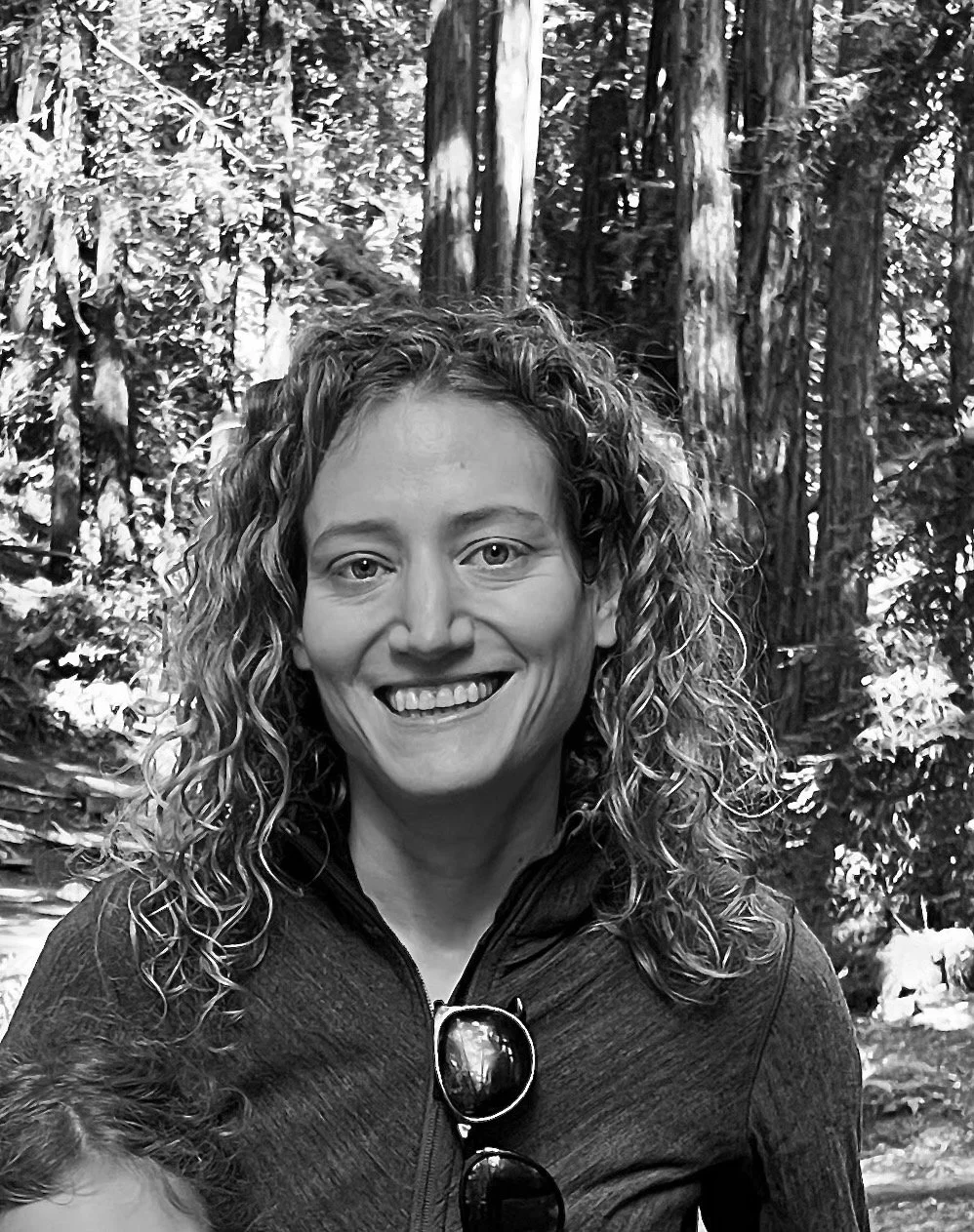
Pronouns: she/her/hers
I’m originally from North Carolina, but I’ve lived in the Bay Area since 2007. I went to the University of North Carolina at Chapel Hill (UNC) for medical school. And then in 2007, I moved to California to start my residency training at Stanford University.
After I completed residency in 2011, I began working with patients in my own practice, and since that time, I’ve learned a great deal that has transformed how I work—from my patients, from colleagues, and from extensive training in integrative medicine, women’s health and menopause related issues, and ketamine-assisted psychotherapy, All of this experience has expanded the breadth and depth of my knowledge base and increased my ability to use an broad set of methods to customize treatment plans with each of my patients.
I am licensed to treat patients in the state of California, and below you can find a list of my specific credentials, followed by a more detailed description of my overall approach to working with my patients.
Credentials
-
Stanford University - Psychiatric Residency
Stanford University - Medical Internship
University of North Carolina at Chapel Hill - Doctor of Medicine (M.D.)
North Carolina State University - B.A. in Biomedical Engineering, B.A. in Biological Engineering
-
American Board of Psychiatry and Neurology
-
San Francisco Center for Psychoanalysis - Palo Alto Psychoanalytic Psychotherapy Training Program
Integrative Psychiatry Institute - Integrative Psychiatry Fellowship
Integrative Psychiatry Institute - Ketamine Provider Training
Polaris - Ketamine-Assisted Psychotherapy Training Program
Perspective Wellness - Ketamine Therapy Training Program
Rick Hansen, PhD - Positive Neuroplasticity Training Program
Rick Hansen, PhD - Foundations of Wellbeing 12-month program
Steven C. Hayes, PhD - Acceptance and Commitment Therapy (ACT) Immersion Program
Steven C. Hayes, PhD - Acceptance and Commitment Therapy (ACT) In Practice Program
Abi Blakeslee, PhD - Somatic Trauma Healing Program, Body-based, Polyvagal, & Neurobiological Interventions
Multiple* - Complex Trauma Training Program (*Arielle Schwartz, PhD, Frank Anderson, MD, and Kathleen M. Chard, PhD)


My Approach
I embrace a holistic approach to understanding the folks I work with and an integrative approach to treatment. I look at each of them as a whole person, and when possible, I look for root causes of their symptoms and develop treatment plans that are anchored in their preferences and values.
Most of all, at the end of the day, I’m most focused on discovering what interventions or treatments seem like the best fit for you—specific to your needs, your life, and what matters most to you.
Why work with me?
You don’t need to wait 8-9 months.
I purposely do not overbook and keep my practice small so that folks don’t have to wait weeks (or months) for an appointment. So if something comes up, symptoms change, or we need to make adjustments, let me know, and we’ll find a time to meet.
15 minutes isn’t enough time.
In my practice, I utilize longer visits. The standard 15-minute visit is rarely enough time. In my experience, rushing doesn’t usually improve outcomes. And if you’re like me, you’re probably not at a loss for opportunities to feel rushed and pressured in your life, and you’re not necessarily looking to add to that list.
My approach is very practical.
It’s important to me that I have clearly communicated what approach I think makes the most sense for you, what risks may exist, and what the experience will be like. If it doesn’t make sense to you or I didn’t communicate it well enough, then I’ll make the time needed to do so.
Many years of experience.
It’s common in medicine that you learn from pattern recognition—seeing patients once and then following up with them again and again. And learning from colleagues often works the same way. I’ve been fortunate to learn from exceptional physicians and leaders in the field. All of this experience is what helps me navigate when guidelines fall short, when the research is lacking, or when quite simply, your body didn’t read the textbook.
Breadth is my niche.
As much as I would love to find the one answer that just solves everything—the what, the why, the how come—I haven’t been able to find it. As humans, we are way more complicated. Even wearing the hat of a specialist psychiatrist requires breadth.
For example, do I have additional training in ADHD? Yes. Do I have expertise in ADHD? Yes. But, am I an “ADHD doctor” (i.e., do I spend all of my time treating ADHD patients)? No. No more than someone is an ADHD person.
Each person who has ADHD is more than just that one diagnosis—they’re a unique individual with many different parts. Knowing how different parts of our body communicate, as well as understanding our many psychological “parts,” helps us to guard against seeing a symptom and, more importantly, a person as just one thing.
My treatment recommendations are part of a conversation, not a one-sided monologue. Not only does it usually feel better to have a say in your own healthcare plan, but you are the expert on your body, not me, and your input and feedback are vital to the success of your treatment.
If I don’t know the answer, I will tell you and then work to find it out (hint: see next part).
It’s not just me.
I am fortune to be a part of several communities of healthcare practitioners who share challenges and offer solutions to one another, providing me with a wealth of valuable perspectives and new insights. These communities include other psychiatrists, as well as gynecologists, urologists, internists, sleep medicine practitioners, psychologists, ketamine practitioners, and spiritual healers, among many others.
Utilizing these connections offers us a unique resource when we’re working together—at times when we are working in a “data free zone,” need a more nuanced approach, or are just curious :)

More Personal. More Precise. And more Human.
The following is an illustrative example of my integrative treatment model in practice and how I often use very different treatment approaches for my clients, even when they have very similar symptoms and concerns:
Illustrative Example of My Integrative Treatment Model:
Two patients make an initial intake appointment with me, and during their sessions, both express difficulty with concentration and focus…
For Patient A, the approach I propose may include both finding a medication that improves attention and focus, without some of the side effects they’ve experienced before, and scheduling psychotherapy sessions with the patient to work on their social anxiety, to help them feel more comfortable in a new role at work.
For Patient B, with the same concern, I propose alternative treatments: helping the patient address previously undiagnosed sleep apnea, and starting a nutritional plan to support cognitive functioning and overall wellness. I might also use specialized laboratory testing, to give us a snapshot of their gut microbiome, and routine lab work, to assess nutritional markers. The lab results would enable me to make much more targeted recommendations than the standard advice of “eating healthy is good for your brain, mood, etc.”
Ready to connect?